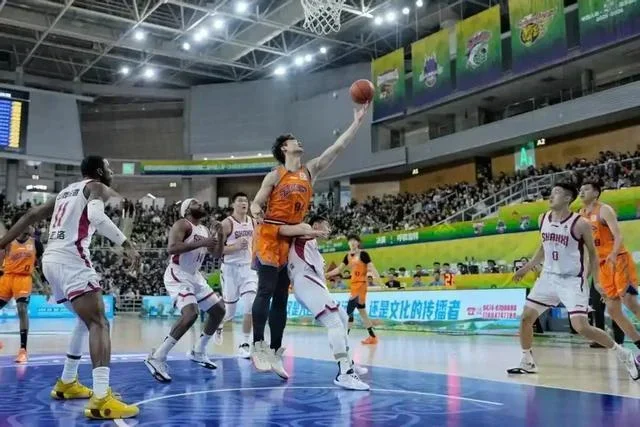

While the Beijing-Guangdong series remains locked in a tense best-of-three battle, the Shanghai Sharks have already swept the Shandong Heroes aside with a commanding 96-68 victory—a 28-point blowout that was far from a fluke.
In Game 1 at home, Shanghai narrowly escaped with a 5-point win. Lofton, just returning from injury, managed only 5 points in 17 minutes, while Wang Zhelin scored 4 in 20 minutes. Li Tianrong also committed two turnovers. It looked like a team crumbling under home-court pressure rather than a playoff contender. Shandong’s defense wasn’t even that stifling—Shanghai simply lost its composure.

But in Game 2 on the road, the Sharks looked like a completely different squad. They outscored Shandong 21-4 in fast-break points, 35-10 off the bench, and blocked seven shots to Shandong’s zero. The Heroes seemed sluggish from the start, getting dominated on both ends.
Under the CBA’s best-of-three quarterfinal format, the sweep means Shanghai avoids a decisive Game 3, saving precious energy for the next round.
**From a 5-Point Nail-Biter to a 28-Point Rout: Shanghai’s Remarkable Turnaround**
At home in Game 1, the crowd’s roar seemed to tighten the players’ nerves, derailing their execution. Coach Lu Wei admitted afterward that they tried too hard to win and lost their rhythm.
For Game 2 on the road, Lu Wei prioritized fast breaks, exploiting Shandong’s slow defensive rotations to create open-court opportunities. He also maximized his bench depth. Lofton exploded for 20 points, 9 rebounds, and 5 assists after his sluggish return. “In Game 1, I was still dealing with injury and couldn’t find my rhythm. The coach told me to run more off the ball, and it worked,” he said postgame.
Wang Zhelin also found his groove with 14 points and 6 boards, staying disciplined on defense. Li Tianrong, after a turnover-heavy first game, scored 14 points. “I wanted to prove myself at home, but I was too tense. On the road, I let go and played my game,” he explained.
According to CBA statistics, the average bench scoring share in this year’s playoffs is about 32%. Shanghai’s bench contributed 36% in Game 2, showcasing elite depth. Xie Liyong added 9 points, and Whiteside chipped in 6 points and 9 rebounds. Meanwhile, Shandong’s bench managed only 10 points—a critical gap.
**More Than a Win: Three Lessons from Shanghai’s Sweep**
This game revealed three fundamental truths about the CBA playoffs.
First, mental adjustment is key. Young players like Li Tianrong bounced back from early mistakes to deliver under pressure. Coach Lu Wei, a former player himself, stays calm during timeouts, squatting with the team to review tactics instead of shouting. That steadiness helps players relax.
Second, coaching evolution matters. Lu Wei played 15 seasons in the CBA, then coached youth teams before becoming Shanghai’s head coach in 2025. He understands players’ mindsets because he lived it. In 2023, he led the team to the inaugural CBA Club Cup title and a 19-3 record in the second half of the regular season. His tactical adjustment to exploit Shandong’s defensive weaknesses was spot-on.
Third, the league’s competitive logic has shifted. It’s no longer just about foreign stars or raw talent. Shanghai’s victory relied on tactical flexibility, mental resilience, and bench strength. Teams that can adapt quickly, like Shanghai, go further.
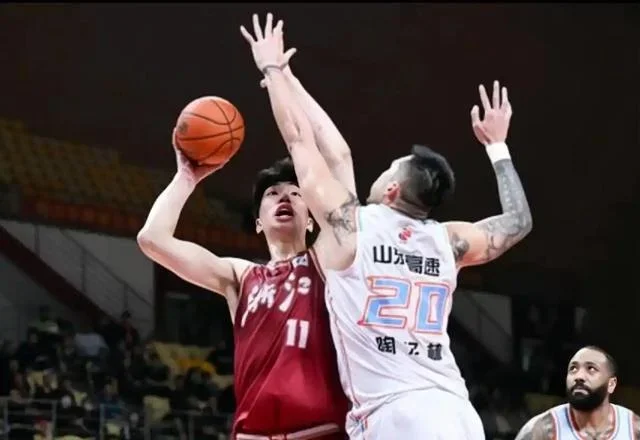
The sweep also reshapes the semifinal picture. By advancing, Shanghai gets to rest while the Beijing-Guangdong winner has to recover quickly. That “rest advantage” is significant.
Furthermore, the game highlights the trend of former players becoming coaches. Lu Wei’s steady progression from player to youth coach to head coach is a model for the CBA. More retired players are entering coaching, which benefits the league.
For Shandong, this sweep serves as a warning: in the playoffs, mentality and adaptability often trump talent. Their defensive vulnerabilities—slow rotations and weak bench—were ruthlessly exposed.
Shanghai’s transformation from a tense five-point win to a dominant 28-point triumph in just one game is the beauty of professional basketball. As they prepare for the semifinals with extra rest, they become a dangerous wildcard.
Ultimately, this series was about Shanghai’s ability to adjust—players and coaches alike stepped up under pressure. The CBA playoffs are not merely about talent; they are about adjustments and composure. That’s what fans love to see, and Shanghai delivered.